
Question
I have always been told never to point my feet and legs in the direction of the the Qiblah. I have to go to the extent of sleeping on the wrong side of the bed to comply. Is there any validity in Islam to this practice?
Answer
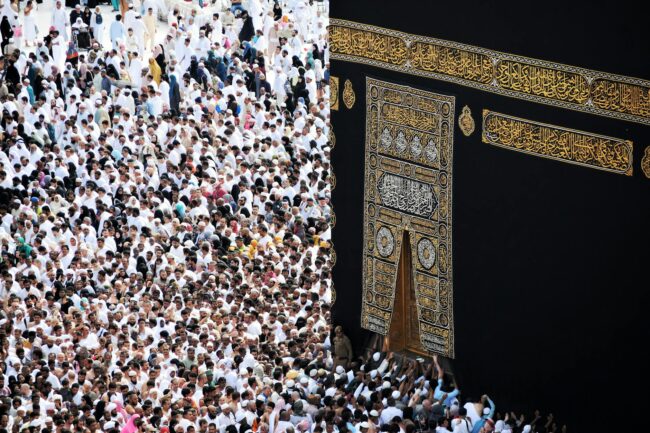
It is important to understand that since the Ka’bah is the most sacred place on eath for the Muslim community, every Muslim naturally desires to maintain an attitude of reverence and respect toward it. This means that a Muslim avoids any act that, in their own understanding and perception, falls within the category of disrespect toward the Ka’bah.
However, it should be kept in mind that people’s understanding of what constitutes disrespect and what does not can vary. One person may consider stretching their legs toward the Qiblah as an act of irreverence, while another may not see it that way. In such a case, the principle is that if a person considers it disrespectful, they should try to avoid doing so. But even here, if it causes a great degree of inconvenience, such as due to the layout of a room or a medical condition, there is no prohibition in doing otherwise. A person himself or herself is the best judge of such circumstances.
That said, the key point that must be made clear is that no symbol of reverence and respect — such as not pointing one’s feet toward the Qiblah — can be considered a part of the Shari’ah unless it is expressly promoted by the Qur’an or the Sunnah. Therefore, if a person happens to lie down with their feet toward the Qiblah without any intention of disrespect, this act cannot be declared prohibited or unlawful.
Furthermore, since perceptions of what constitutes respect and reverence differ even within the same society, it is not appropriate to pass a judgment of “disrespect” based merely on an action, especially when that action can just as easily be performed without any ill intent. We should refrain from passing value judgments about the intentions of others.
In summary: Pointing one’s feet toward the Qiblah is neither prohibited in the Shari’ah nor can it simply be dismissed as superstition. It is a personal matter of reverence that depends on an individual’s own intention and awareness.
Answered by: Mushfiq Sultan